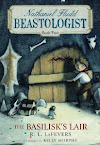
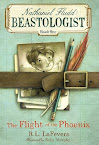
Well, I am positively fizzing with good news, only I can't share it yet. It is a bit like sitting on a giant champagne cork, waiting for it explode.
However, I am now able to officially reveal the cover of Theodosia and the Last Pharaoh, which is almost as exciting!
This one ranks right up there as one of my favorites. I especially adore that rich, peacock blue. ::happy sigh::
Also this week I interviewed two terrific fantasy authors over on the Enchanted Inkpot. Jennifer Nielsen has written a terrific, humorous fantasy called Elliot and the Goblin War, and the second interview is with Elizabeth Bunce, author of A Curse as Dark as Gold, and in the interview we talk about her new book, STARCROSSED. (Which I have read and is awesome!)
Until next week...
Friday, October 15, 2010
Monday, October 04, 2010
Different Journeys: The Innocent
Posted by
Robin L
Okay, it took me longer than I thought, but I’ve been stewing on it, plus the whole Junkyard Brain syndrome kind of interfered for a day or two.
The archetype of The Innocent strikes me as being particularly well suited to kids books, especially picture books, early chapter books, and middle grade stories. The innocent lives in a perfect world where all his needs are taken care of and no horrible things have happened to convince him that the world is other than that perfect place.
When a character is the Innocent, his developmental task is to step into a new awareness—to recognize that the world isn’t paradise and his needs will not always be met and, perhaps most difficult of all, that everyone in the world does not exist in order to please him or make his life easier.
It is a classic stage in emotional and psychological development, and it comes to all of us at different times and in different ways and we bump into it in all areas of our lives.
It seems to me it could involve:
In fact, one could make the argument that childhood is a series of falls from that state of innocence.
I am pretty far removed from picture books these days, but one example that springs to mind is Kitten’s First Full Moon, a classic example of this ‘fall’ from innocence. Kitten is certain that the full moon is a bowl of cream, meant just for her. The book is about how she learns that isn’t the case at all. Can any of you think of picture book examples?
In a YA or adult book, it seems as if this type of journey might work for someone who’d led a relatively perfect and charmed life and met their first hardship. Other than that, once Innocents get past about ten, we tend to think of them as narcissistic. ☺ Even so, that journey from self absorption to self awareness is a powerful one. As an adult, however, it also requires a high degree of willful denial and a determination to NOT see in order to maintain that pretense. But lord, we’ve all met adults who were stuck there. I think the big difference, though, in dealing with the Innocent in an older book is that you have to take them farther on the journey moving them into and through other stages (which I’ll talk about in the future.) They can’t end simply with the realization that they are not the center of the universe, whereas a kids’ book could conceivably.
So what then, would the steps be of an innocent’s journey look like?
Act One:
Ordinary World—show the protagonist either using people or being oblivious to their needs.
The Precipice—hint at fall or minor fall, the catalyst provides the initial crack before the entire façade begins to crumble.
The Fall—protagonists eyes are painfully opened to the realities of the world
Act Two:
Coping mechanisms- denial, band aid fixes, attempts and adjusting shallow surface behavior. To learn that we've been fundamentally wrong is painful so there is some denial, as well as guilt, fear, shame, all those horrible feelings.
Tip of the iceberg—the crack created by the initial fall spreads until the whole world/situation is different. Cannot go back to the way they were at the beginning of the story. (midpoint)
Regrouping—Now What? Moving through the full chaos of the real world with eyes open.
Act Three:
Evolve or Die (metaphorically, at least) Trying to re-understand the world with this new awareness; attempts to adjust, either through solving the problem or shifting behavior. First couple of attempts fail or, even better, make things worse.
True understanding and acceptance—either of the world the way it is or human frailties
Integration—something that shows he’s truly absorbed all this and moves through the world in a new way.
I think one of the things that makes accepting that fall so difficult is, to accept it, we have to realize our own culpability in what has transpired. Obviously to a much, much smaller degree in kids still developing normally through those stages, but even they have to accept that they were wrong. I think that’s why kids sometimes have such a well developed sense of ‘when I was little” even though the event they’re talking about might have only have happened six months ago. It’s a way to disassociate with the embarrassment one’s younger self brings them.
The kinds of things that motivate the innocent are fear and need. Probably pretty basic needs on Masler’s scale: need for safety, whether emotional or physical, the need for shelter and food and someone to care for them.
What do you guys think? Do you see other steps or ways to move through that journey?
Can you think of any good examples of books or movies in which the hero is an innocent?
The archetype of The Innocent strikes me as being particularly well suited to kids books, especially picture books, early chapter books, and middle grade stories. The innocent lives in a perfect world where all his needs are taken care of and no horrible things have happened to convince him that the world is other than that perfect place.
When a character is the Innocent, his developmental task is to step into a new awareness—to recognize that the world isn’t paradise and his needs will not always be met and, perhaps most difficult of all, that everyone in the world does not exist in order to please him or make his life easier.
It is a classic stage in emotional and psychological development, and it comes to all of us at different times and in different ways and we bump into it in all areas of our lives.
It seems to me it could involve:
- That moment you realize your parents are not all-powerful or infallible
- The realization that the sun and moon do not rise and set every day just for you
- The first time a best friend lets you down or betrays you
- A treasured, admired older sibling does something horribly wrong or flawed
- That rude awakening when you realize other people are not there to simply make you happy.
In fact, one could make the argument that childhood is a series of falls from that state of innocence.
I am pretty far removed from picture books these days, but one example that springs to mind is Kitten’s First Full Moon, a classic example of this ‘fall’ from innocence. Kitten is certain that the full moon is a bowl of cream, meant just for her. The book is about how she learns that isn’t the case at all. Can any of you think of picture book examples?
In a YA or adult book, it seems as if this type of journey might work for someone who’d led a relatively perfect and charmed life and met their first hardship. Other than that, once Innocents get past about ten, we tend to think of them as narcissistic. ☺ Even so, that journey from self absorption to self awareness is a powerful one. As an adult, however, it also requires a high degree of willful denial and a determination to NOT see in order to maintain that pretense. But lord, we’ve all met adults who were stuck there. I think the big difference, though, in dealing with the Innocent in an older book is that you have to take them farther on the journey moving them into and through other stages (which I’ll talk about in the future.) They can’t end simply with the realization that they are not the center of the universe, whereas a kids’ book could conceivably.
So what then, would the steps be of an innocent’s journey look like?
Act One:
Ordinary World—show the protagonist either using people or being oblivious to their needs.
The Precipice—hint at fall or minor fall, the catalyst provides the initial crack before the entire façade begins to crumble.
The Fall—protagonists eyes are painfully opened to the realities of the world
Act Two:
Coping mechanisms- denial, band aid fixes, attempts and adjusting shallow surface behavior. To learn that we've been fundamentally wrong is painful so there is some denial, as well as guilt, fear, shame, all those horrible feelings.
Tip of the iceberg—the crack created by the initial fall spreads until the whole world/situation is different. Cannot go back to the way they were at the beginning of the story. (midpoint)
Regrouping—Now What? Moving through the full chaos of the real world with eyes open.
Act Three:
Evolve or Die (metaphorically, at least) Trying to re-understand the world with this new awareness; attempts to adjust, either through solving the problem or shifting behavior. First couple of attempts fail or, even better, make things worse.
True understanding and acceptance—either of the world the way it is or human frailties
Integration—something that shows he’s truly absorbed all this and moves through the world in a new way.
I think one of the things that makes accepting that fall so difficult is, to accept it, we have to realize our own culpability in what has transpired. Obviously to a much, much smaller degree in kids still developing normally through those stages, but even they have to accept that they were wrong. I think that’s why kids sometimes have such a well developed sense of ‘when I was little” even though the event they’re talking about might have only have happened six months ago. It’s a way to disassociate with the embarrassment one’s younger self brings them.
The kinds of things that motivate the innocent are fear and need. Probably pretty basic needs on Masler’s scale: need for safety, whether emotional or physical, the need for shelter and food and someone to care for them.
What do you guys think? Do you see other steps or ways to move through that journey?
Can you think of any good examples of books or movies in which the hero is an innocent?
Friday, October 01, 2010
The Junk Closet Inside my Brain
Posted by
Robin L
You know how every kitchen has a junk drawer? And most houses have an entire junk closet? Well, my brain has one of those. I’d like to think it was small, like a drawer, but the truth is it is much more like one of those giant closets in cartoons. The ones where you open them and forty years worth of odds and ends and collectibles and, well, JUNK, threatens to tumble out.
The sad truth is, I am the mental equivalent of a pack rat.
The thing is, I have no idea why stuff gets stored in there. Stupid, unimportant stuff that should have been tossed out years ago. And I have no clue as to how it’s organized. I don’t understand why all the things I really want to remember, need to remember, aren’t stacked neatly inside that closet like they should be.
Even worse, sometimes that mental junk closet gets so stuffed with my mental detritus that it leeches out to take over my entire brain and I suddenly find I can make no mental headway on anything until I take some time and clean out that mental junk closet.
That’s what I’m going to do for the next three days. Sift through some of this stuff clogging up my gray cells.
Hm. I just realized that would make kind of on interesting characterization/world building exercise. What’s inside your protagonist’s junk drawer or closet? (Does the world they live in even have such a thing? What would their equivalent be?)
::peers cautiously into my own junk closet::
Mine has boxes of Christmas ornaments, old vinyl records we never use any more but can’t quite bring ourselves to throw away, slot cars from a racing set my husband had when he was a kid. Some blank, Styrofoam balls I got for a craft project we never did, vacuum cleaner bags for a vacuum we no longer own, six years worth of Easter baskets, a telescope we can’t quite figure out how to work, end rolls of old wrapping paper, a Brazilian luck/charm/wind chimey thing my mother brought back from her travels.
Junk closets might be a fabulous, concrete way to show a character’s good intentions, failed dreams, and stuff they can’t let go of…
Wednesday, September 29, 2010
Orange County Children's Book Festival
Posted by
Robin L
I keep forgetting to mention that I will be at the Orange County Children's Book Festival this Sunday, October 3, at Orange Coast College. I'll be reading on the big stage (yikes!) at 1:30.
It would be awesome to meet any of you who are in the area!
Monday, September 27, 2010
Be It Ever So Humble…
Posted by
Robin L
My son and I were talking today about humility. He’s gotten very involved in kickboxing, and he was talking about how important it was for participants to approach the sport and sparring with a humble attitude. When they do that, they learn faster and people respond to them better.
That has a surprising corollary with writing, oddly enough. A humble attitude and a willingness to admit to what you don't know will go a long way toward easing a writer's journey. Conversely, it can be annoying when new writers act as if they will do it differently than all those who came before them (as if all those who came before them did it that way simply because they didn't know any better or enjoyed being inefficient), that they won’t take ten years to get published, or that their manuscript won’t need round after round of revisions. Or whatever. It is highly, highly annoying.
But...
I don’t think you can teach someone else to be humble by telling them about it. They have to run smack into it themselves. We all have to crash headlong into our own humility, not be urged to it by well-meaning outsiders. It’s a lot like democracy; you can’t import it—it has to grow organically from the organism itself—not be transplanted. ☺
Humility is like that. In fact, most of Life’s—not to mention, writing’s—really important lessons are like that. You have to run into them full tilt so that they knock you on your @ss and WAKE YOU UP to the fact that something is not working.
Just like our characters don’t wake up one day and decide, Hey, I need to change who I am or turn my life around, most people don’t wake up one day and realize all our writing is dreck.
That’s where that long string of rejections comes into play. It weeds out those who aren’t willing to adapt and try new things. Because that is what failing repeatedly forces us to do—what all failure and rejection forces us to do—stretch and grow and learn to come at problems from an entirely new angle. Or learn a new skill so we can try again.
Thursday, September 23, 2010
Different Journeys
Posted by
Robin L
So I’ve been thinking a lot about the differences between male and female journeys, most especially since it was one of the factors that surprised me with my most recent project—the end and resolution stage went on longer than I thought—and not because I couldn’t manage to wrap it up but because the heroine’s journey simply wasn’t finished yet.
It also occurs to me that labeling these different journeys by gender isn’t the most descriptive or accurate distinction, so maybe different labels are in order. Maybe, pulling from The Hero Within, the Warrior journey versus the Wanderer or Martyr’s journey is more apt. Except, of course, martyr is just so laden with negative imagery.
But here’s the big distinction. With the male or warrior journey, the arc ends once the protagonist has faced his internal or external demon and gained the prize, whether it be a hard earned nugget of wisdom or an actual physical thing. He then returns briefly to his ordinary world a changed person; either wiser, gentler, more understanding, whatever. His eyes have been open in some fundamental way and he has achieved a whole new self.
But the feminine journey doesn’t stop there. For women, learning how to wield that newfound wisdom or power once back in their ordinary world is a critical part of their journey. It’s not just about claiming power or wisdom, but facing down others to use it. Because it is hard for women to claim that power, hard for them to speak their truth, discovering those things is only one part of their transformation. Now they must use it and in the process, redefine the relationships in their lives.
The warrior archetype is lacking in wisdom and needs that to temper his warrior tendencies.
Women, on the other hand, need to learn to tap into their warrior tendencies.
I think that’s an interesting distinction. It can also be hugely helpful in trying to determine where the emotional juice of your story is.
I’m also trying to see how that fits in with the increasingly popular woman warrior archetype, such as the kick @ss heroine found so often in paranormal and urban fantasy books. Clearly those entire genres are a means of reclaiming the warrior archetype for women—a much needed balance. I’ll have to go pull some books off my shelf and see, but I’m wondering if part of that journey is forcing others in one’s life to get comfortable with that warrior woman archetype; to show the benefits of that archetype within communities and society since it is something society has not been comfortable with in the past.
I’m also pondering how it works when applied to middle grade fiction rather than YA or adult fiction. It seems to me, that up until middle grade books, the gender based distinctions are much less apparent, which isn’t surprising since adolescence is when those hormones really kick in.
Looking at Theodosia, it seems to me I’ve flipped the archetypes a bit; she is a bit of a warrior, albeit a sneaky, supernatural one. So her journeys tend to be about tempering those tendencies and gaining wisdom.
Nathaniel Fludd, on the other hand, is about as far away from a warrior as you can get. Each book is about him gaining one new step toward becoming a warrior, and then the final books will feature him moving through his world as his new warrior self.
Anyway, I just found it interesting to think about—specifically to be conscious of when plotting or writing the book because whether the wisdom is the end point or learning to use that wisdom is, will greatly alter the shape of the story.
And of course these are gross generalizations; there’s no way to avoid that when talking about archetypal journeys, but I think it’s something worth considering.
Monday, September 20, 2010
A Very Un Zen Confession
Posted by
Robin L
I have a confession to make. I pretty much have a bi-publishing personality disorder. When I am actually doing the writing, I am very Zen and love the process to death and am fully immersed. Even when it is hard (and sometimes it is very, very hard) it is still what I would rather be doing than just about anything else. It is a very inward, creativity-centered, process-oriented, live in the now time.
And then I have to hand the manuscript off, whether to beta readers or agents or editors, and that whole centered Zen place just kind of disintegrates before my very eyes. It’s hard to stay Inward when everything else is happening OUT THERE. Suddenly everything that has only ever existed in my head on my computer or notebook, is now out in the world.
It is much like having a first child go off to kindergarten and I cannot help but worry over how he is doing. It is nearly impossible for me to stay inwardly focused when all the next steps in the process are A) happening outside of me and B) out of my control. The truth is, it’s a squirrely, antsy, fidgety mental place to be in.
Oh sure, I know the old adage, throw yourself into the next project, but sometimes that’s not feasible. Sometimes I’m still immersed in the old project, already jotting down ideas for strengthening it, tightening it, revising it, making it better. But even as I do all that, I can only kid myself so much; I keep one eyeball on my inbox, waiting, worrying, wondering, wishing.
And I guess I felt that, as much as I trumpet a Zen and process-focused approach, I also needed to come clean about how I can’t always get there myself. And it’s not so much a do as I say, not as I do kind of thing, but rather while the Zen is what we should aspire to, we can’t always get there, in spite of our best efforts.
Hope you all had a less antsy weekend than I did!
Wednesday, September 15, 2010
Where Stories Come From Part Deux
Posted by
Robin L
I was thinking some more about stories and where they come from, and was struck by all the different reasons writers write; some to tell stories, some to communicate, some to wallow in words, some to explore human nature, others to explore intriguing ideas and what ifs. I found myself wondering just how much the WHY we write influences the FORM of what we write. I mean, I already talked about where the emotional juice for our writing comes from, but in addition to that, does the reason we write determine what we write?
For example, are wordsmiths drawn more to poetry and literary vehicles? Do communicators gravitate more to non fiction? Murder mysteries, political thrillers, and police procedurals seem a natural vehicle for exploring human nature. As do romances, albeit a different aspect of human nature. Well, probably all writing explores human nature to some degree, but for some books it is more front and center than others.
Anyway, it just occurred to me that part of the long apprenticeship of writing involves experimenting with a wide variety of forms and seeing which one best fits. Writing in one's strongest voice probably includes the right synthesis of subject matter, purpose, and form.
Monday, September 13, 2010
Where Stories Come From
Posted by
Robin L
A couple of weeks ago on another blog someone wanted to know why people who weren’t young adults would be interested in writing YA. It struck me as a bit of an odd question, because I’ve never had the sense that writers were only propelled by their own demographic for their stories. But it is also a legitimate question in a broader sense, and it got me to thinking about why we write and where our stories come from.
My own theory is that our richest, most authentic stories come out of our own traumas and heartbreaks. Not necessarily in a direct correlation—I was beaten as a child therefore I will write about child abuse. But rather the core emotional issues, the wounds and scars that have shaped us, will also shape our stories. And the nature of those will in turn help determine what age group we write for.
Stories are the psychological equivalent of pearls, if you think about it. At some point in our lives, we receive this grain of sand—some horror or trauma or huge obstacle that becomes a permanent part of who we are. And then the magic begins to happen. Time passes, we move on, we begin to heal, scar tissue forms, we begin to grow again, only this time our growth encompasses those painful experiences. And if you are lucky enough to have a creative outlet, those painful experiences cannot help but shape what you create, much in the same way the shape of your hand determines the way you play the piano or the choice of medium affects what your artwork looks like.
My childhood and teen years were my most emotionally tumultuous, one great big stewing pot of dysfunctionality. It tapered off toward the ends of high school, but it was too late. The scars and wounds I’d received in childhood were so much a part of me that they radically affected every aspect of how I viewed the world and how I interacted with people, thus ensuring high school was hard and not the glowing ‘best time of your life’ that so many adults think of it.
So it is no surprise that when I write, that is where my stories come from. That place. And yes, even though I am well, (WELL!) past being a young adult, Not only was that the most fertile for me story-wise, but the thematic issues I am drawn to explore lend themselves best to that age.
Once I hit adulthood, I got lucky, found unconditional love, got married, and had kids. My life has been pretty great so far. Not exactly smooth sailing, raising kids is never smooth sailing, but there have been far fewer traumas and upheavals, and very little scar tissue and lots of lessons learned.
Which is why I write for kids and young adults.
Friday, September 10, 2010
I'm a Geek!
Posted by
Robin L
Okay, that's probably not news to any of you who read my blog, but the fact that I'm a GeekMom is new. I am very excited to be a contributor to this online community because I love the idea of all these moms who have such interesting passions and interests. Such geekiness, if you will. So if you are interested in parenting issues or in getting in touch with your inner geek, check it out. I will mostly be writing about my own personal geekiness, which centers around writing, research, history, and fantasy.