Saturday, November 15, 2008

Odure

Someone nearby has gone and fertilized their field, and not with any, run-of-the-mill fertilizer. Oh no. This stuff reeks beyond the reekiest thing in your imagination (even my current writing!) It’s not a simple horse manure type stuff, but some ghastly, vile, fish guts and horrid chemical smell that burns the inside of one’s nostrils. Ugh.

Makes it very hard to concentrate on today’s pages.

Hmm...maybe I can pretend it’s the stench of the Thames and incorporate into today’s writing.

Friday, November 14, 2008

Making My List And Checking It Twice

No, not my Christmas list, my reading list. For when I finish this Book That Will Not End. Well, that and the next book, but I only have six weeks to get that written so I’m sure that time will fly by. I have a whole list of books I can’t wait to read, but they’re too diverting—they’ll take my voice and story interests in a whole ‘nother direction and I can’t afford that. At least not until Jan 15, and then, watch out! I’m going to plant myself on the couch and read for two weeks straight!

Some on my list:

Ink Exchange
Gargoyle
Kushiel’s Mercy
The Born Queen
Midnight Never Come
The Sugar Queen
The Immortal

Thursday, November 13, 2008

Stuck in iSuck

Bleah. This is the hardest stage of the manuscript, the pure slogging stage, where I am sick unto death of this plot and these characters and whose idea was this anyway? Every word I write reeks of dreck and sewage.

Even worse, I added five pages of revision notes today, pleased that my page count would go up, bringing me ever close to The End. Except, I ended up removing just as many pages as I added. So not only am I stuck in iSuck, but I’m going nowhere too. I formally dub this The Book That Will Not End.

Double bleah.

Friday, October 31, 2008

In Honor Of Halloween....

Back in June when I had a chance to go to the ALA conference, I was lucky enough to have dinner with my editor, my agent and another author, Brian Lies. (Yes, isn't that a terrific name for an author! Lucky!)

Brian is one of those guys who knows something about everything and makes a fascinating dinner companion. Especially since I can get a little shy at those sorts of things, so all I had to do was sit back and listen (and try not to put my foot in my mouth when I did talk.)

Anyway, Brian is also the author and illustrator of the rollicking, hilarious, and brilliant BATS IN THE LIBRARY. (And you don't have to take my word for it, it's been on the NY Times Bestseller List for over seven weeks!) If you haven't already, take the time to check it out. The illustrations are breathtaking, full of humor and detail and the kind you could sit and absorb for hours. It's the perfect Halloween treat for any young readers you know. They might even share their candy with you while you read it to them!

Happy Halloween!

Tuesday, October 21, 2008

TatSoO Ships Early!

Hello, remember me? I have been gone a long, long time, so I don't blame you if you don't.

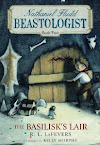
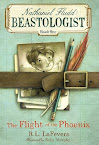
I’m really sorry. I keep vowing not to do that, and then…I do that. The good news is I've been writing, writing, and writing, busily working away on revisions to the first Nathaniel Fludd, Beastologist book (The Flight of the Pheonix) and frantically working away at the third Theodosia book, (Theodosia and the Knights of Horus.)

Also, that part time job I loved? I ended up having to quit due to time constraints (that and the fact that my back hated it) so I should be better about blogging here. (Okay, stop laughing!)

Also, for those of you who've been eagerly awaiting the next book, THEODOSIA AND THE STAFF OF OSIRIS shipped four weeks early and is in stores now, so you don't have to wait until November 10. And if you're hungry for a teaser, I just posted a first chapter excerpt on the Theodosia blog. Check it out!

And my sincere thanks to all of you who keep checking back here. I'll try to be more deserving of your loyalty in the future.

Tuesday, August 12, 2008

Random Acts of Catch Up

Well, it’s taken me a good two weeks to get back into my groove since the conference. No real surprise there.

RWA was terrific! I got to see some dear, dear friends that I hadn’t seen in three years, so that was fabulous. There were a lot of marketing sessions, so I got some good info that I’ll be sharing over at Shrinking Violets. Another thing I was heartened by was the unspoken theme this year, or at least, the unspoken theme that I glommed onto, was that it was time to step outside the conventions of the genre, if that’s where your story took you. Not just for the sake of being different, but because you needed to go there. There were a number of indicators that the genre was in need of fresh, original voices and takes on stories, so that’s always nice to hear. In fact, two of my favorite quotes from the conference were:

No one will remember you if you write small. I think that was Shauna Summers who said that. Also, The worst thing to be is forgettable. That may have been Shauna, too. My notes aren’t as clear as I’d like.

I got to meet Sherry Thomas, one of my favorite new writers this year, and pick up her most recent book, DELICIOUS, which I loved. An unexpected treat was that I got to meet Melissa Marr, whose WICKED LOVELY was fabulous, and pick up a signed copy of her newest, INK EXCHANGE. I’m saving that for a treat when I finish my first draft of Theo 3.

Which, btw, I’m at that plodding (not plotting!) stage of Theodosia 3, needing to go back in and weave all the threads that developed as I wrote the discovery draft of the first half. Once I have that all in place, I can pick up steam and write the second half. Sometimes my process annoys the spit out of me.

In other news, I finally finally got a myspace page up. I swear, I may be the last author on the planet to put up a myspace page. I was conflicted for a long time because the majority of my readers are under 13, and therefore technically not allowed on myspace. However, I’ve come to see that there are a number of librarians and booksellers and other writers whose purpose is to network with each other, so it finally made sense to me. So if you're on myspace, feel free to friend me!

Oh! Another session at RWA that I found extremely helpful was one with Eric Maisel. Specifically, his suggestions to reframe our self talk to honor our creativity more. I especially liked his suggestion that instead of discipline in our writing, we talk of devotion, and that really struck a chord with me. Many people comment on how disciplined I am, and I have to resist snorting at them. Moi? Disciplined? Not so much. I am, however, devoted to my writing, just as I am to my family. The truth is, when you love something, it is very, very easy to devote yourself to it.

So if you’re having trouble finding the discipline to put your butt in that chair and write, try finding that little spark of devotion that first got you interested in writing in the first place. That may be a much better motivator for you. It is for me.

Tuesday, July 29, 2008

Off To A Conference

I am heading off to the RWA National Conference in San Francisco tomorrow morning, not that you’ll miss me since I’ve been scarce again. (I did warn you.) The funny part is that I thought it would be less expensive attending it this year since there wouldn't be any airfare involved--it was close enough for me to drive. Well, that was before gas climbed up to $4.70 a gallon and before I learned the hotel charged $50/night for parking. So now I'm flying after all.

I am way looking forward to filling my well with lots of craft advice and discussions, as well as just being in the incredible cloud of energy that develops when so many creative people are in one place.

For those of you who won’t be going to any conferences soon, I thought I’d point you to some fabulous advice on writing in first person given by one of my favorite fantasy writers, Carol Berg. Be sure and read both part 1 and part 2. I especially liked her comment that when she tried writing in third person, she felt like she was five miles out of town. Perfect description of how it feels when you can't quite connect with your characters. Enjoy!

And I’ll be back next week and report in.

Scratching My Head

Every once and a while, it feels like I’ve completely forgotten how to write a novel. I can’t figure out where to start, or how to plow forward. So what do these people do, I whine to myself. What gets the plot moving, or worse, what is the frickin’ plot? That’s when the digging begins.

And for digging, I find the most useful tool is a large, 11x 17 or 17 x 21 sheet of graph paper. I take that big piece of paper and write the protagonist’s name and any other major players, along with any plot goals I may know of, for example, a quest for the emerald tablet. Then I just do that whole brainstorming thing where I try to fill in the following sentences:

Theodosia wants
Wigmere wants
Sticky Will wants
Stilton wants
Fagenbush wants
Awi Bubu wants

Somehow, seeing it visually helps my brain forge the connections and possibilities that merely listing them or thinking about them doesn’t.

Then once I have some vague goals for people, I begin fleshing out why they want it. Because I’ll have to show that in order for their goals to makes sense, so that gives me some great scene material.

Next, I find out what is in the way of their goals. If my muse is on top of her game, I find that many of the characters are standing in each others way, which means I have a nice big connected tangle of goals and conflict that all tie in to the major plot. Usually there are one or two dangling, like Will’s. Will wants to provide for his brothers and keep and earn Wigmere’s respect. However, in my current plot, that’s not really threatened or in any kind of danger. So now I have to brainstorm some action, plot thread, or layer that pulls that goal into the main story.

Plotting. Not for the faint-hearted.

Friday, June 20, 2008

Of Bridge Conflicts and Withdrawn Protagonists

Well, I lied about the tomorrow part. Sorry about that. It’s been a busy week. And hot! Yowa. 92 degrees in the shade. And anything over 78 melts my brain.

Anywho….

Sometimes it can seem impossible to build a strong enough emotional connection between the character and the reader AND start the book when the trouble starts. Of course, in an ideal world, you could do both, but since many of us are not perfect writers, we have to find other ways to accomplish this end. For me, my own personal philosophy is, when in doubt to err on the side of connecting with the reader emotionally. What I sometimes use to do this is called a bridge conflict. Which simply means that in the beginning of the story, the protagonist is in conflict with something, but that something happens not to be the main plot element.

For example, in Theodosia and the Serpents of Chaos*, the inciting incident for the main plot is when Mum brings the majorly cursed Heart of Egypt home with her. The problem I ran in to was, if I started the book there, I’d have to shoehorn in too much backstory in order to make the reader understand about what Theo’s “normal” life looked like, because it was very, very different than the average normal life, either then or now. Plus if the reader had a chance to understand how on her own Theo was, her emotional isolation as she dealt with this major problem would be more vividly understood. Or that was my thinking at the time. (I do find that writing theories evolve over time, so who knows what I’ll think in five years!)

So the book opens with Theo in conflict with a cursed artifact that her mother has sent home ahead of the rest. This does a couple of things. Shows Theo’s Ordinary World. Gives clear parameters of what the magical rules are in the story world. Establishes Theo’s emotional isolation, as well as her plucky resourcefulness at dealing with it all. And shows how she ends up taking care of the adults around her. All in all, a nice micro encapsulation of the themes Theo will be struggling with on a grander scale throughout the course of the book. I was also able to get one of the bad guys in there in that first scene, although deeply hidden.

So Theo’s conflict with the Bastet statue was a bridge to the main conflict, giving the reader enough time to settle into the complex world of the story AND bond with Theo, so when this big bad nightmare of a problem fell in her lap, they would see how it was testing her beyond her normal coping strategies.

I think one of the things that determines whether or not bridge conflicts works is whether or not the story has enough plot layers. Which is really the subject of another post, but essentially plot layers are all the different areas of the protagonist’s life that the main plot impacts. The bridge conflict can’t be about something that never comes up again in the book. It needs to tie into the overall cohesive elements that form the various plot elements or lays the foundation.

Creating an emotional connection with a withdrawn or reserved protagonist.

Well, this was the problem I was whining about that started this whole series of posts. In my most recent book NATHANIEL FLUDD, BEASTOLOGIST, The book opens with Nate sitting in a lawyers office, receiving the bad news that his parents have been lost at sea. The scene ends with the lawyer hustling him off to the train station, where poor Nate departs for parts unknown, specifically his last remaining relative.

The good news was, I had indeed started the story when the trouble starts: finding out your parents are dead and being shipped off to the unknown is Trouble.

The bad news, Nate was unbelievably passive. As a child in an adult situation, all he could do was sit and take in information. Kiss of death, interest wise. Clearly he would be easy to sympathize with, him. But my challenge was to show HIS emotional scars and wounds so that the reader would care about him specifically and not just, oh, ho hum another orphan in children’s literature…

The emotional set up for his character was that Nate had been emotionally and physically abandoned by his parents into the care of his governess/nanny. And while she appeared very loving and to have his best interests at heart, she also managed to quash him in many ways; curiosity, any desire for adventure, etc. But how to show that or allude to that in the first scene without just telling a lot of backstory?

What I finally ended up doing was having him sit there, instructed by Miss Lumpton to draw while she talked with the lawyer, essentially to be seen and not heard. Then he hears the lawyer mention his parents and he stops drawing to listen, and Miss Lumpton exhorts him to keep drawing. But suddenly he has a goal, even if a very tiny goal. To understand what’s happened to his parents and by extension what will happen to him. This is also a nice way to get some dramatic action in what was a very physically static scene. The action of Nate’s drawing or stopping or fiddling with his pencil gave me some nice vehicles for showing his emotional state rather than telling.

Plus it is just the sort of thing that stupid adults say to kids, as if they can sit there and turn off their ears!! And by that one command, I (hopefully) was able to convey how much Miss Lumpton squelched his curiosity, his intelligence, and his place in the world, until he became merely an extension of her desires. Okay, maybe it doesn’t convey all that, but that’s what I wanted to convey and if it touches on some of that, I’ll be happy.

Which is a long way of trying to illustrate that even the most withdrawn protagonists who are afraid to react in their world, if you dig deep enough and long enough you can usually find some way to establish unique, empathetic characteristics as well as tiny little goals.

And now I simply must go finish up my lesson plans for the SBWC then get ready for work. If you have questions or need further clarification or examples, say so in the comments and I’ll address them next week!

* I’m not trying to be all about me by using examples from my own books, they are just the ones I understand the best.

Monday, June 16, 2008

Pulling the Reader In – Part Deux

One caveat before I continue talking about story beginnings. We all have different reading tastes and will have different opinions on what makes a good story. Therefore, take my ramblings with a grain of salt. If you are someone who reads for plot, you may (quite validly) disagree with me. If you are all about the subtle character studies, my suggestions may seem too heavy-handed for you. And that’s fine. For me, as a reader and writer, I find myself drawn to stories where the plot and character are intertwined, with the plot being the physical vehicle through which the character effects meaningful personal growth or change. Your mileage may vary.

In fact, a really good exercise is to pull 10 of your favorite books off the shelf and read the first scene. What about that scene grabs you? At what point did you feel you were in the hands of a skilled, competent storyteller and decide you wanted to go along for the ride? That can be a good guide as you try to construct your own first scenes. Now, onward...

In order to show the emotional scar or wound in the first scenes of a book, that means you, the writer have to know quite a few things in order to pull that off.

You have to have a fairly firm grasp of both the internal and external character/plot arcs in your novel. If you don’t understand what is emotionally driving your characters’ actions, then you can’t show it to the reader. See, the thing is, people don’t set off to join the cheerleading squad, be the star of the soccer team, find out what’s inside that spooky house at the end of the street, or become queen bee of 4th grade just because. While those are excellent external plots—lots of pro-active actions a protagonist can take towards those goals—there are usually internal reasons that propel a person to pursue those goals, and that’s what I think can be missing in so many books, and more specifically, in so many openings.

We need to know why THIS scenario is so meaningful for THIS kid, above and beyond other kids who have found themselves in similar situations. Without seeing a glimpse of the emotional impetus that drives them—or at least seeing evidence that something is driving them emotionally, then even the most physically suspenseful, action-packed opening can feel flat and lifeless.

Think of all those women out there who aren’t big sports fans, would never spend a minute watching any sporting event on TV, yet if you put THEIR kid on the field, their emotional involvement is suddenly way up and they are rabidly involved in the game. You want your readers to have that same emotional connection with the characters in your story so that they care deeply about what happens to them

So one of the most helpful tools in getting all these elements on the page is the ol’ goal, motivation, and conflict trio. You should know both the internal and external GMC for your main character, and find ways to make sure you get it on the pate. You don’t need to have all those elements in the first scene—in fact that would be TMI. You want to seduce the reader along, raising questions, creating empathy, and making them curious enough that they keep turning the page.

Then try to couple that with compelling situations, such as…
Have the character be in undeserved trouble
Have the character do something nice
Have them be funny
Put the character in physical or emotional jeopardy
Show them as skilled or intelligent or plucky
Show them in conflict with someone or their surroundings


Some examples:

Theodosia and the Serpents of Chaos
Her goal in that first scene is to keep her father safe from whatever curses might be on the Bastet statue. This is a solid encapsulation of her larger goal of keeping her family safe in general. Her external motivation is also made clear, that she is the only one who can see these curses, therefore she is the only one who can deal with them. It also, hopefully, hints at her emotional scar or wound—she is left having to take care of the adults around her in very dangerous circumstances because no one would be inclined to believe her should she dare to explain about the curses. The scene (hopefully) also hints at her emotional abandonment by illustrating just how much she’s left on her own both physically and in a coping sense. Also, she’s in conflict with both her surroundings (curses) the adults around her, she’s in undeserved trouble for trying to protect her father from the curses, and she’s plucky and intelligent.

In Harry Potter, his initial goal is just to endure the Dursleys. Instead of seeing the emotional scars, we actually witness the actions that cause these scars, which is equally, if not more effective, but it can be very hard to do in a way that doesn’t load the opening of the book with backstory. So Harry’s grim circumstance is the motivation for his first goal, to find out what is in that mysterious letter that shows up and opens a whole new world to Harry, one the Dursleys don’t want him to explore. This is also where conflict is introduced. Harry defies the Dursleys and tries to get at the letter to discover this mystery about himself. Harry is shown in lots of undeserved trouble, he’s plucky, he’s in conflict with everyone in his family, he tries to do something nice for the snake at the zoo (commiserate) and clearly he’s in emotional jeopardy by living with these horrible people.

In My Big Sister is so Bossy She Says You Can’t Read This Book, Effie is shown in a wildly unfair power balance with her sister. Like Rowling, Herhsey does a good job of showing us the actions that cause Effie’s scar tissue, right in that first scene with her sister (motivation for the subsequent events). Even if Effie can’t articulate her goal, the reader can sense she needs to get out from under her sister’s thumb and get some justice. In fact, that whole first scene nicely sets up her internal goal: Get out from under Maxey’s overbearing ways, Motivation: because she’s steamrolling over Effie all the time, Conflict: Maxey’s got such a strong personality, and Effie doesn’t have the personal strength or fortitude—yet—to get her to back off. But Effie is funny, she’s in undeserved trouble with both her mother and her big sister, she’s waaaay plucky, plus there’s that big secret/lie thing she mentions, right up front.

Tomorrow – what to do if you can’t get the main external plot elements to start in that first scene, and how to make a quiet, mousy, withdrawn protagonist likeable, or at least empathetic.